

Report cards are supposed to reveal how a child is doing in school. They do not. Here are some research-backed strategies parents can use to determine how your child truly is performing in school.
October is associated with many scary things like horror-movie-character Halloween costumes, frightening Jack-O-Lanterns that are eerily lit up, and the occasional front yard decorated like a graveyard replete with creepy sound effects.
Another scary event in October?
Kids’ receiving their first report card of the school year! And while some children may dread getting their first report card, many parents have absolutely no idea how their child is performing in school. That is frightening!
Don’t believe it? Research backs it up.
A Learning Heroes study found that 90% of parents believe their child is at or above grade level in reading and math. In reality, 26% of 8th grade students are proficient or above in math and only 31% are proficient or above in reading.
For parents, good grades equate to being on grade level. Clearly this is not the case. Grade inflation continues to be alive and well in many schools. According to the Fordham Institute, grade inflation is the increase in average grades awarded to students over time, absent higher academic achievement. For example, one study showed that over one-third of high school students earning a B in Algebra 1 failed the end-of-course exam.
Sound familiar?
Of course many students are still catching up from pandemic learning loss. According to the Center For Education Policy Research at Harvard University, “The average American student is less than halfway to a full academic recovery from the effects of the pandemic.” The study combined test scores and academic research along with parent interviews to reveal the disturbing data.
If parents knew exactly how well – or in this case how poorly – their child was performing, the majority of parents polled in the Learning Heroes study said that they would make it a priority to seek assistance for their child if they knew they were behind academically.
So the logical question is: how exactly do you know how well your child is performing in school?
How to determine how your child is doing in school
Certainly report cards are one data point that parents can refer to in order to learn how their child is doing in school. However, as outlined above, grades no longer carry the same value and indicative nature they used to. A student with a 3.0 grade point average could still very well flunk each of the End-of-Course exams.
So parents need to integrate many data points, including district level testing, state level testing, and teacher comments during conferences. All of this information can create a picture of performance.
What else can parents do?
Review report cards But also frequently review the online grade books such as Skyward or Power School. There you can see daily grades and any missing work.
Attend Parent teacher conferences While meeting with the teacher, ask two questions: 1. How is my child performing compared to their peers in this class? 2. Is my child still behind from pandemic learning loss or is he/she caught up to where they ought to be?
Monitor homework habits Do they complete it easily? Is there resistance and/or frustration? Do they need constant help to complete it?
Talk to your child about their school day Ask open-ended questions to help elicit responses beyond yes or no. For example, What was your favorite part of today? What was something that made you laugh? Which is your favorite class, and why?
Monitor Absenteeism Get your child to school. They simply cannot learn while at home sick.
Chronic absenteeism is defined as missing 10% or more school days, meaning 18 days of a typical 180 day school year.
What to do if your child is struggling in school
There are many courses of action a parent can take if their child is not performing well in school. These include:
Get independent testing If your child is receiving average to below average grades and you are concerned about their academic performance, independent testing can deliver a lot of useful information. Jennifer Pelz, Speech-Language Pathologist, Learning Specialist, Clinical & Educational Evaluator at Engage the Brain, often evaluates students. She says that testing gives a clear picture of a child’s strengths and challenges.
Pelz goes on to say that there are three types of tests.
Academic testing shows whether a student is on grade level in reading, writing, and math, helps identify learning gaps, and guides intervention goals.
Comprehensive diagnostic evaluations go deeper, uncovering potential language-based learning disorders, providing official diagnoses, and outlining classroom accommodations or scholarship documentation when needed.
Speech-language evaluations identify communication difficulties that may affect comprehension, expression, or even reading and writing development.
Finally, Pelz states, “Most importantly, understanding how a child learns and recognizing their challenges is empowering for both children and families as it validates their experiences, reduces frustration, and provides a clear path forward for growth and success.”
Develop the Soft skills These skills – which include emotional intelligence, collaboration, and problem solving – are more important than academic success and are a better predictor of future success than grades. A study in the American Journal of Public Health showed significant associations between a child’s social-emotional skills and future success in education, employment, and mental health.
Final thoughts
October usually ushers in the first report card of the school year and many parents may not know how their child is doing academically, even after receiving and reading the report card. Studies show that the majority of parents think their child is doing well when in fact the statistics paint another picture. Pandemic learning loss still looms large in most classrooms, and determining where your child stands in relation to peers and academic standards is critical.
Of course academics are important, but research also backs up the importance of the soft skills. As Dr. Becky Kennedy, a clinical psychologist, said, “Don’t raise your child to be the best kid in the room. Raise your child to make the room better.”
If you are concerned about your child’s progress in school or simply do not know how well – or poorly – they are performing, contact Jennifer Disch at Engage the Brain to learn how testing or personalized, research-backed one-on-one sessions with a trained Learning Specialist could benefit your child.

Why do parents need a support system? And strategies and techniques to help parents develop and flourish in a thriving community ecosystem.
Anybody who is a parent knows the job is difficult. It can be the most wildly intoxicating experience, where you bubble and ooze with pride, and the next moment it drags you down to depths you did not know existed and rips your heart out. All in one day! Parenting is not for the feint of heart.
Which is why parents need help. No, not self-help books, though they can contain some pearls of wisdom. And definitely not influencers! No, parents need other trusted humans to step in and offer help in the form of a support system.
What exactly is a support system? According to Nationwide Children’s Hospital, “A support system is a network of people who provide an individual with practical or emotional support. Support systems come in many different forms, but they are all built around the idea of love and care.”
Typical support systems are made up of extended family members, co-workers, teachers, doctors, other community professionals, neighbors, and really anyone who cares about your child.
Some parents are blessed to have extended family nearby or a set of close friends that they connect with because they have children of similar ages or in similar activities. But that does not make these people a support system. Unless you use them as such!
What does that mean?
Why build a support system?
As mentioned, parenting is difficult. Perhaps more so now than ever before given all the factors that exist, including social media. Wouldn’t it be nice to have someone that you could turn to for advice? Support systems offer way more than just encouraging words.
A support system can combat feelings of isolation. Parenting, especially of young children, can be isolating, so finding a community is important.
Community can improve mental health and emotional well-being by helping parents develop effective coping strategies and foster empathy. A study in the National Library of Medicine found that parents who perceived themselves as having a healthy support system had children with fewer mental health concerns.
Support can reduce burnout. Parenting is obviously difficult, and relying on others can help share the enormous task of raising children.
The support system can assist with child care. Hello date night!
Having a support system allows you the parent to present as a positive role model. Kids clearly learn from their parents, and if they see you with healthy and positive relationships it will pay dividends with their future relationships.
Support systems expand social connections. By actively seeking a support system parents can expand their social network to others who can offer support and or encouragement.
The community can offer potential diverse viewpoints. If your support system features people of different backgrounds, it can offer opportunities to learn about a variety of parenting techniques.
It can provide an increased sense of self-efficacy. According to SAMHSA, a support system can increase parents’ confidence in their ability to care for their children. Most people want that positive feedback that they are doing the right thing.
Finally, support systems offer additional healthy adult attachments. Thriving children tend to have more supportive adults in their lives than just their parents. These people allow your child to develop and practice establishing appropriate relationships with community members.
How to build a community support system
Now that we convinced you to build a support system, how exactly do you do that, while actively parenting, which is a full time job? Read on to learn how!
Nurture relationships with family and friends. The old saying “if you want a friend, be a friend” has wisdom in its simplicity. Like a garden that must be tended to if it is going to flourish, relationships are the same way. Reach out and connect to maintain ties. Not sure what to say? Ask a simple question: How are you doing? or Do you need anything?
Organize play dates for your kids. Of course parents need to communicate to set up play dates, so slowly and authentically allow these relationships with other families to grow. Perhaps there are carpool opportunities or just a casual Saturday lunch. Find parents that share your values and views on raising kids.
Join online support groups. Yes, social media can be a cesspool of negativity and expose the underbelly of humanity. But if you look carefully enough, there are some good groups gravitating around on sites. Your kids may tell you Facebook is for “old people,” but there are support groups for parents that offer connection, support, and ideas.
Seek professional help. Reaching out to professionals to build your support group is a sign of strength, not weakness. Vitality Medical and Wellness says these individuals may include doctors, therapists, coaches, or mentors in your community. A good support system ought to be varied in its makeup and the right professional can add wisdom and objective information to your decision-making process.
Join school organizations. Most schools have some version of a PTA or Parent Teacher Association. If your time is limited or you have a specific focus in mind, perhaps there are parent groups that support a sports team or drama club that your child participates in.
Attend local speaker events. Many professional organizations host events when a professional from the community speaks to the public, offering advice and perhaps the latest research on a topic. Engage the Brain is hosting a Community Connections event on Monday, September 15, featuring Alison Slater Tate, a widely known author and expert on the college admissions process. Another event is scheduled for October.
Accept the help. It is one thing to have a thriving support system. It is another to use it and to accept the wisdom or experience or time that is offered. Acknowledge when you need the assistance and take it. That is the point of having a community!
Final thoughts
Have children changed and are they simply more difficult to raise nowadays? Of course not! But the circumstances surrounding the process of parenting are clearly more challenging. From social media issues and keeping up with Jones’ syndrome to mental health concerns, today’s children face obstacles the previous generation of kids did not face. Which all leads to parents needing support. Whether you feel isolated, burnt out, or just need to hear validation that you are doing a good job, building and using a support system offers tremendous rewards to parents.
Engage the Brain encourages families to connect and to support each other, and we are proud to be a source of parenting information for the Central Florida community.

Why should parents set up for routines for their kids? And what are the most important parts of effective routines for children?
Darren Hardy, New York Times best selling author of The Compound Effect, said, “A daily routine built on good habits and disciplines separates the most successful among us from everyone else.” This is surprisingly true. It is not intelligence, nor the correct family tree, nor good fortune. And while all those may offer assistance at times, it truly is the repetition of a well-honed routine that breeds consistent success.
As we creep towards and arrive at the beginning of a new school year, this offers the perfect opportunity for parents to help their school-age children develop a series of morning and afternoon routines that will successfully launch them into the 180-day orbit that is the school year.
Why establish routines
Children thrive on structure and routines, according to Seattle Children’s Hospital.
Why?
Kids feel safe and secure in their environment. This allows them to know what is happening now in the present and, more importantly, what is to come in the near future. Anxiety and frustration melt away into a puddle of the known.
Routines also help children cope better with transitions, according to PBS Kids. Some children have a challenging time shifting from school to home. They may keep themselves together at school, saving the meltdown for the safety of home. Establishing an after-school routine can help with this transition period. Children practice their self-regulation skills, which will foster a more positive self-image and healthy social emotional development.
Finally, routines can reduce conflict and power struggles, according to The Kids Mental Health Foundation. Quite simply, when kids know what is expected of them there is a reduced chance of conflict and rebellious behavior. For example, knowing the expectation is to start homework after arriving home from school prevents the parent from having to remind and nag their child to do so.
How to set up routines that work
Strive to create a schedule that includes a designated homework time, healthy snack break, chores, physical activity – especially if your child does not play a formal sport, family connection time, down time, and free time. Additionally, name the location in your home where each activity is expected to occur.
Think about your child’s age, temperament, energy level, daily homework amount, and extra curricular activities, if any. Set up time blocks for each element in the schedule.
Include your child in the process! The main elements need to be in the routine; however, your child can suggest the order and time length needed for each part. Coach, nudge, and sway as necessary. A two-hour video game session upon arriving home may not be the best start to an after school routine!
Be consistent as much as possible. The consistency creates predictability. And as the author Hardy shares, it is the daily repetition of these good habits that success is built on.
Perhaps most importantly: Post the schedule as a visual aid so that your child will see it each day upon entering your home.
What to do if your child won’t follow a routine
Of course all of this sounds great until your child looks at you like you have three heads and each one is speaking a different foreign language! Not every kid is going to automatically fall in line following even a reasonable routine.
First, simplify the routine and ensure your child understands exactly what is being asked of them.
Next, post the schedule in a clear location – on the refrigerator, for example – with simple to follow directions.
Start with mealtimes, homework time, and bedtime. Add on other parts as your child becomes settled into a basic routine.
Consistency is critical. Each day the expectations ought to be the same, as much as possible.
Allow your child to be part of the routine creation. They can suggest the order of their after-school schedule. Of course be ready to gently guide them to an appropriate schedule.
Provide positive reinforcement. It could be verbal praise or even a monetary reward if the routine is followed correctly.
Lastly, praise the effort! Even if your child fails at following the routine, compliment what they did do right. Perhaps they got home, had their snack, then began homework, but it was too difficult or they did not understand what to do. Offering praise for the effort is huge and deposits money into the good will bank.
When to implement routines
The three times of day that benefit the most from an established routine are in the morning before school, in the afternoon after school, and at bedtime. A key component to the success of routines is keeping the same order of activities, according to Raising Children Network.
Morning routines ought to include:
Parent “Me Time.” Provide yourself – the parent – with 10 to 15 minutes of me time before the kids get up. This time can offer you an opportunity to complete a quick yoga practice or mindful mediation or to simply enjoy a cup of coffee with your spouse. Bonus: sensitive kids can pick up on your stress so it is even more important that you relax before you encounter the kids in the morning.
Eat a healthy breakfast. Depending on the age of your kids, you may need to still be chef and wait staff. Starting the day with a healthy meal can launch your child’s day with a smile and optimism to handle another day of learning and growing.
Proper hygiene. Kids may need reminders about brushing teeth and washing hands. Make sure these seemingly obvious steps are in your posted morning routine.
Eliminate morning electronics. This means no television or phone use. Kids, especially neurodivergent ones, will frequently gravitate to electronics as a way to appease boredom. Or simply out of bad habit. This will derail them from getting dressed and or brushing their teeth.
Ensure lunch is packed. Frequently this can be accomplished the night before, but ensure your child has his lunch packed before you leave the house.
Homework and necessary items are packed. Like lunch, this step can be completed the night before, but either way backpacks need to be packed and ready with computers, homework and any other necessary items.
Afternoon routines ought to include:
Snack. Depending on your child’s schedule, they may have eaten lunch early in the day and are ravenous upon arriving home. Because you control the food pipeline in your home, ensure there is a variety of healthy snack options.
Homework time. Yes, your child knows she must complete her homework, but a good routine specifies what time and where in the house this is will occur. Generally, the earlier the better. Waiting until 8:00 pm to start homework is never a good idea, no matter what age your child is!
Physical activity/movement. If your child plays a sport, this step may be unnecessary. However, for the majority of kids, they need to get the CDC’s recommended 60 minutes of exercise per day. If your child has ADHD/ADD then this becomes critical! Whether your family is blessed with a big beautiful backyard or you need to hike it to a nearby park, encourage your child to get out and get moving. They are more likely to agree and enjoy this if other kids are present.
Downtime. A good after-school routine ought to include some downtime. This means no electronics. Your child could listen to music (yes, this is electronics but not screen time), read a book, write in a journal (about what a wonderful parent you are for creating this routine), or just daydream; there is power in doing nothing.
Free time. Of course, every kid just wants to get home form school and have the rest of the afternoon and evening to themselves. After all they have been tortured – we mean learning – all day in school. Business before pleasure is an enduring idiom for a reason, and it is never too early to begin teaching this concept to your child.
Bedtime routines should include:
A consistent bedtime and wake up time. Good sleep hygiene starts with a set bedtime and consistent wake up time. Encouraging your child to adopt these routines will benefit both their physical and mental health.
Brushing teeth and putting on pajamas. Most children are not wired to want to brush their teeth. This practice must be established and part of a nightly pre-bed routine.
Read-aloud story. Younger children – up through elementary school- typically enjoy listening to a story before bed. As a bonus: research shows that reading aloud can improve school performance!
Quiet time. This could include reading a book, coloring, and or working on a puzzle.
Reinforcement and kind words. Ending the day with a hug and or kiss sends the message to your child that they are loved and cared for. Offer a compliment about their day and or some positive affirmation that helps your child feel safe and secure.
Final thoughts
Certain times of the year are ripe to start new habits. New Year’s Day and our birthdays are two obvious examples. For children, the beginning of the school year is one of these fertile times of the year when routines and new habits are likely to take root and grow, with the right nourishment. As we have emphasized, it is the repetition of good daily habits that separates the successful from the those that languish in mediocrity and/or unfulfilling results. By helping your child to develop a before school, after school and bed time routine, you are setting them up for success not only in school but for the rest of their lives.
If you or your child struggle with developing or following a routine, contact Jennifer Disch at Engage the Brain to discover how an Executive Functions coach could work with your child to teach these critical skills.
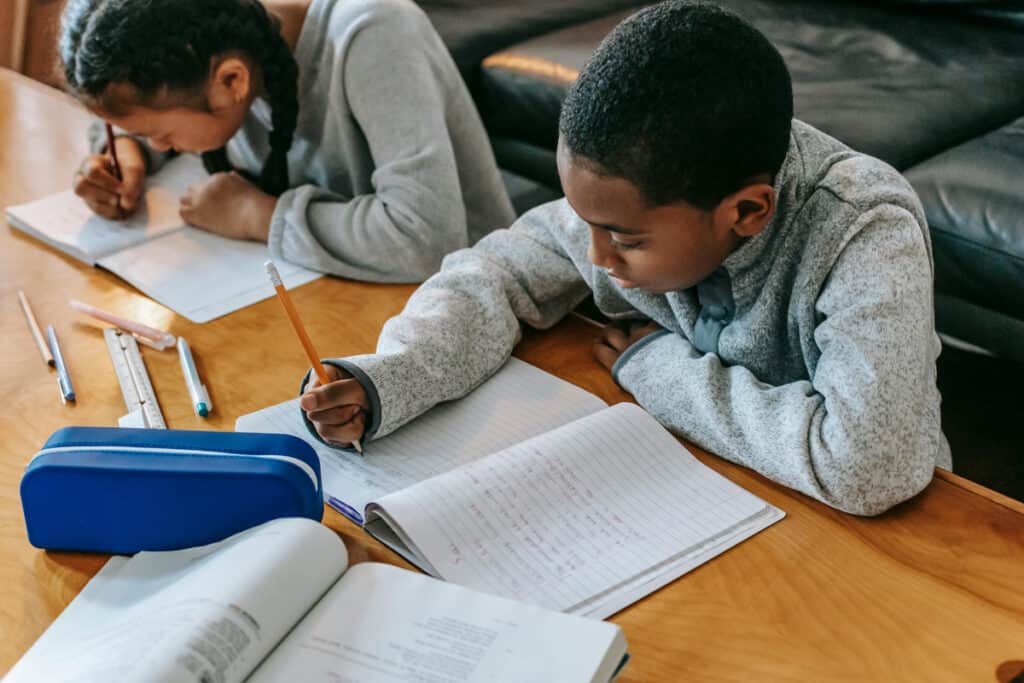
How much summer learning is necessary for children? And how to achieve the Goldilocks amount to keep your child from suffering the Summer Slide.
School has been out for about a month and many parents may be looking for easy-to-prepare academic activities the kids can do to help offset the dreaded “summer slide.” The trick of course is finding activities that have genuine educational value that your child will actually want to do. That’s where Engage the Brain comes in. We have scoured the Internet and curated the best reading, writing, and math activities that your child will enjoy.
Why summer learning is important
Summer is a bridge between school years. Make it a scenic and enjoyable crossing by selecting high value and high interest activities that your child will take to. By engaging in appropriate learning activities, your child will stave off the summer slide, which is the regression of skills during the summer months. Read more about it here.
The questions often raised are: how much learning must my child do to maintain his skills? Is it possible to actually make progress and get ahead during the summer? If so, how?
How much summer learning is necessary?
Most families are looking for the Goldilocks effect: just the right amount of learning to keep skills sharp but not overwork the child so that they become recalcitrant, rebellious, or burnt out.
So how much is the right amount?
Governor’s Early Literacy Foundation reports that children need to read six books during the summer to maintain or improve their reading skills. This could be broken down into daily reading sessions of 20 to 30 minutes, with a mixture of nonfiction, fiction, and online media.
Kids may like reading more than you would think. Nearly 60 percent of children ages 6 to 17 say they love or like reading books for fun a lot, and 52 percent think it’s extremely or very important, according to the Scholastic Kids and Family Reading Report.
According to Dr. Rick N. Bolling, a superintendent at Bath County, Public Schools in Virginia, “One thing is certain: lengthy workbook/skill practices are not innovative and do little to prevent the summer slide. Instead, learning should be viewed as a continuous journey. Just like in athletics, skills need continual practice to become highly successful.” He goes on to say that sessions ought to be short so as not to overwhelm and lose student interest.
Of course a great way to soak in summer learning is by enrolling your child in a summer camp that combines academics and fun. One such program is Summer Smarts, hosted by expert Learning Specialists.
However, if you are looking for less formal options, that’s where our curated list comes in! The activities are broken down into reading, math, and writing activities. They truly are a la carte, so bring them to your child and allow them to pick and choose which one(s) look like fun.
Reading activities
Create a cozy reading nook in your home. Sometimes all it takes to get kids reading is a little imagination. Whether in the living room or in a bedroom, create a cozy reading area adorned with comfy pillows and blankets. Of course it needs enough light to see the pages!
Form a family book club. Have everyone in the family, including parents, join in to read an agreed upon book. Does your family prefer fiction or nonfiction? Set up weekly discussions to share insights about the book, and come up with a catchy name for your family book discussions.
Join a summer reading challenge. Most public libraries offer some version of a challenge for children during the summer months. Often times prizes are awarded for achieving a certain amount of pages read. This could be the motivator your child needs!
Make regular trips to the library. By creating a routine where you go to the library each week kids have the motivation to read and select new books each week. And it is free! As bonus: they can check up on the Reading Challenge they joined!
Incentivize reading. Of course we want children to develop intrinsic motivation, but if your child is a reluctant reader, then offer to bribe, we mean pay them. Set up a reasonable payment plan for each book read.
Get hands-on with science experiments. Encourage your child to read a science book and then conduct an experiment. A good suggestion is The Everything Kids’ Science Experiment Book by Tom Robinson, which uses simple, everyday items typically found around the house. Some are messy but not dangerous!
Math activities
Go on a shape scavenger hunt. As you walk your neighborhood, perhaps with your pet pooch, challenge your child to see how many different shapes they can find. For example, a Stop sign is an octagon and a Yield sign is a triangle.
Hold a Measurement Olympics. Head out to your backyard, if big enough, or to a nearby park. Encourage your child to throw either a baseball or a football and then figure out how to measure how far the ball traveled. Repeat this but this time kick the ball. Maybe bring a tape measure or a ruler or yardstick. Determining how to measure the distance is part of the learning process. Using a stop watch – most smartphones have one in the clock app – time your child running certain distances. This can introduce a discussion about decimals.
Estimation challenges. If your family is headed somewhere on vacation, ask your child to estimate the mileage. Are you driving or flying? Challenge them to make their best estimate in how long it will take to get to your destination. Even just a mundane trip to the market can become a family estimation challenge. Who can come closest to estimating the total cost of the grocery bill? Encourage your child to round prices to the nearest dollar to help make their predictions.
Hopscotch Math. The traditional game of hopscotch lends itself to different math activities. After you draw the basic outline for the game, decide what skill you would like your child to work on. For example, in each box you could place a multiplication fact that your child must solve when they land in that box. Another option is to record fractions in each box, and when your child lands in a section they must announce an equivalent fraction. And yet another option is to place a decimal in each section and when your child lands in a box they must either read the decimal or offer an equivalent fraction. The math possibilities are endless!
Play board games. Board games are a wonderful way to sneak in some math practice. Any game that involves rolling dice and or keeping score naturally involves math. In some games the math is more overt, such as Monopoly, while in other games such as Qwirkle the math is “hidden” within the fun of the game. As a bonus your child can also fine tune their Executive Functions skills while playing games by thinking about strategy and planning out the best way to win the game.
Get cooking. Cooking has so many great math skills. Everything from fractions in the recipe to temperature of the oven to elapsed time to cook the item, not to mention reading comprehension. Because stoves and ovens can be dangerous for younger children, a parent will need to assist in the kitchen. So pick a family favorite food, plan out the ingredients, and start cooking!
Writing activities
Practicing writing during the summer has multiple benefits, including reinforcing skills such as grammar, spelling, vocabulary, and sentence structure.
Send a Pen Pal Letter. A great way to get kids to write is to set up a Pen Pal. Perhaps a grandparent living in another state – or even across town – could be summoned to write back. Whether you choose “new school” and send an email, or “old school” and send a handwritten letter, either way your child is drafting and forming sentences and cohesive thoughts.
Write an original play script. Kids are creative. Some love to play with Lego figures and other childhood staples, while other children like to make their own characters, such as sock puppets. Either way, encourage them to develop a story script and to write it down. Maybe use an existing story for inspiration then put their own spin on the plot. Like the pen pal activity, scripts can be handwritten or placed into the electronic world on a Google doc. Either way is a win for writing!
Make an original greeting card. Perhaps you have a future Hallmark card writer, waiting to creatively express a common sentiment. With some simple supplies like card stock in assorted colors and markers and or crayons, challenge your child to create their own greeting card with appropriate message. Birthdays, anniversaries, graduations, all deserve recognition.
Create their own Mad Lib. Mad libs are those fun short stories that having missing words that a person supplies, based on requests like a plural noun or a verb in ing form that ultimately turn out funny. Kids will love writing these and as a bonus will be reviewing the parts of speech.
Write a new ending to a favorite story. Sometimes, kids just need a nudge to write. After reading or re-reading a favorite story, challenge your child to come up with a different ending to the story.
Respond to a writing prompt. Prodigy has some great writing prompts that your child can choose to respond to. What’s even better is the prompts are divided by elementary, middle, and high school level and by type: creative, persuasive, etc. Challenge your child to respond to one each day.
Final thoughts
Summer and learning do not need to be a binary option for kids: either all fun or all learning. By selecting entertaining and sneaky educational activities, your chid can have the best of both options. Striving for the Goldilocks amount of learning, which ought to include reading, writing, and math activities, during the summer will keep your child’s brain active and the Summer Slide away.
If you struggle to find educational activities for your child or they simply do not want to engage in learning during the summer, contact Jennifer Disch at Engage the Brain to discover how a Learning Specialist could motivate your child by presenting quality, research-backed materials that are both fun and educational.

What are the benefits of continuing your child’s learning during the summer? And what are some easy and effective ways to do it?
Parents, you made it! The last day of school came, and all the stress of the school year magically disappeared. No more homework battles. No more telling Tanya to put her tuba in the Toyota. No more complaints from your child about the healthy lunch you planned and prepared. But, now you are faced with two months of unstructured time to fill, all while trying to be budget-conscious about camps and vacations, and most importantly, your own sanity.
Intuitively, you know you should continue your child’s learning over the summer. How do you do that without reigniting all of those school year battles? By following our plan presented below.
What follows are a few words about the Summer Slide and why it is absolutely real. Then some research on the benefits of summer learning. And finally, some easy ways to promote learning over the summer months.
The summer slide
According to a study conducted by NWEA, students in grades 3rd through 8th lose about 20 percent of their school year gains in reading and 27 percent of math gains. Beyond looking at formal studies, common sense would suggest any student who does not engage in any academic pursuits – reading, writing, or math – for two straight months will regress or lose some of the gains made during the past school year. If you stop exercising for two entire months, are you going to be in the same shape you were in when you resume working out? Of course not.
Another way to look at this is by asking educators what they see in their classrooms when students return the following fall. According to a survey conducted by Progress Learning, only 31 percent of teachers report that students retained the material taught the previous school year. Which is why the first month back in school is often spent reviewing last year’s material.
Of course pandemic related learning loss is still a consideration. Many students simply shut down during remote learning and are still catching up to where they ought to be. Studies and statistics vary by state, student age/grade and socioeconomic class, but it is clear a majority of students are still behind due to lingering effects of the pandemic.
However, the summer slide is not inevitable! A study by the research firm Kappan found that 22 percent of students actually made gains during the summer. How? By keeping children active in learning environments.
5 Benefits of summer learning
Catch up on key skills. Some classes are just more difficult than others for certain students. Summer is a great time to revisit these key concepts and to ensure proficiency before the next school year. Online resources such as Khan Academy can be used.
Learn a new skill. Summer is a wonderful time for your child to explore a topic of their interest. Facilitate their passion by supporting trips to the local library – or book store – to find books or other research materials. Reading is reading, so encourage them to dive deep into this topic.
Makes transition back to school in the fall easier. Students who simply shut down academics over the summer will undoubtedly have a more challenging time returning to school in the fall. Their Executive Functions skill of shifting has been idle for two months, and shifting back into a structured school schedule and environment could be difficult. Conversely, those children who have kept some semblance of a schedule over the summer and continued learning will seamlessly return to school in the fall.
Explore Enrichment opportunities. Some students have passions that simply (and sadly) get ignored during the school year due to lack of time. Summer is a fantastic time of year for your child to dive deep into their interest. For example, if your child is fascinated by pirates, encourage them to learn more. Whether guiding them to your local library or museum, if appropriate, or just assisting with online searches that lead to “rabbit holes” of pirate informational booty, your encouragement is critical to their success.
Strengthen parent-child relations. Let’s be honest – parenting during the school year can be stressful and challenging. Homework battles, projects that creep up – or you learn about – at the last minute, sports practices that have rotating schedules, etc. Sometimes parents lose patience and children, even young ones, can detect the stress. Summer offers an opportunity for you to support your child’s interests in a less demanding way. There are no grades! Rekindle special relationships by focusing on what your child likes to learn about and both enjoy the journey to new knowledge.
7 Ways to foster summer learning
There are an unlimited number of ways to support your child’s summer learning. One caveat: plunking a few worksheets in front of your kid and expecting the summer slide to slip away will not work. This is especially true in math. A Harvard study states that worksheets alone will not stave off learning loss. Rather students must engage in problem-solving and applying the concepts. Below are some suggestions on how to best position your child for a productive summer of learning.
Find a formal summer program. Most towns have a plethora of summer programs. Of course they are not all created equal. One great option is Summer Smarts, presented by Engage the Brain. Summer Smarts is a series of week long academic camps with a particular themed focus, taught by Learning Specialists. Themes range from Greek Gods to Minecraft Adventures to History Mysteries. Camps are offered on a weekly basis so your child can pick the one(s) that interests them.
Volunteer with a local organization. Depending on the age of your child, they may be required to accumulate a certain number of service hours for graduation. Volunteering during the summer is a wonderful way to give back and chip away at the required hours. And, your child will be practicing their Executive Functions skills. For example, time management and planning will be necessary when they receive the schedule of when they are to be at a particular location. If there is any fundraising going on, of course they are now applying the math concepts referred to above.
Cooking. Encourage your child to select a recipe and start cooking. Of course many recipes are loaded with fractions: 1/2 cup of this, 1/4 cup of that, etc. and elapsed time. What time will the peanut butter cookies be done? Most kids will need your support with hot stoves and ovens, so pick a day when you have enough time to properly complete a family favorite recipe.
Create a board game. Many kids have played board games such as Monopoly or Sorry or Candy Land. Encourage them to make their own game. With easy-to-obtain supplies such as construction paper, markers, pens, and or crayons, challenge your kids to develop a game that the whole family can play. Maybe they “borrow” ideas from existing games and add a new twist.
Join a public library reading challenge. Many public libraries hold reading activities and challenges for school age children during the summer. The Maitland (Florida) library offers one such example. Prizes are awarded by minutes read, which can be tracked on a reading log. There is even a challenge for adults!
Take a virtual tour and or check out museum exhibits. While in-person visits to local museums are usually the best for kids, the rest of the world is out there waiting to be explored virtually. Without leaving the comfort of your home and your child’s favorite chair in the family room, you could explore the Grand Canyon, The Great Barrier Reef, or The National Museum of Natural History.Your destination is only limited by your imagination.
Plant a garden. There are so many great skills and learning opportunities involved in preparing, planting and caring for a garden. If your backyard is not conducive to growing a crop or two, many towns have “community gardens” where residents may use a section to grow items of their choice. This is a summer long – or perhaps longer – activity, so be sure to discuss the commitment necessary for the garden to succeed.
Final thoughts
Like so many things in life, the answer to how your child can have a great summer is balance. No, parents do not need to keep a strict 7-hour school day-like schedule going with hourly lessons written down for child to dutifully complete while you are at work each day. As silly as that sounds, the antithesis of this is also true, meaning you cannot shut down academics altogether for two straight months and expect your child to waltz back into a classroom in August and be ready to go.
Clearly there is a middle ground that will fend off the Summer Slide and allow your child some flexibility and creativity in how they read, write, work with numbers, and ultimately learn over the summer. Whether your child attends a formal summer program, joins a library reading challenge, or heads out on virtual expeditions, reading texts, writing something down and working with numbers in a more problem-solving capacity is their ticket to a productive and balanced summer.
If your child struggles with engaging in academics over the summer, or you have difficulty creating meaningful activities for child to engage in, contact Jennifer Disch at Engage the Brain to discover how a Learning Specialist may be able to work with your child to develop a personal learning plan that promotes all the critical literacy skills necessary for classroom success.

How do you help your child stay motivated at the end of the school year? By following this carefully cultivated list of strategies and techniques.
It is the beginning of May, and in Florida the end of the school year is only about a month away. And the end of the school year can bring mixed emotions to parents: dread because you have to figure out what to do with your child for two months; relief because homework battles and school projects will be placed on pause; pride because your child had a great year; or a weird combination of all these that swirl around simultaneously.
Whatever you are feeling, hopefully we can agree that you want your child to finish this school with motivation and zeal towards learning. How on Earth can you accomplish this, when your child may be halfway checked out and in the throes of spring fever? By following our carefully cultivated checklist!
High priority tasks
Maintain their self-care: This includes eating a proper diet, getting enough exercise – 60 minutes per day of moderate to vigorous exercise, according to the CDC, and getting adequate sleep – 9 to 11 hours, according to The National Sleep Foundation.
Stick to routines: Psychology Today encourages parents to stick to consistent routines, which build self-confidence and self-control, both of which can waver this time of year. These routines ought to include homework times after school, chores and responsibilities, and consistent bedtimes.
Contact your child’s teacher(s) asking for academic areas to focus on this summer and for next school year. Summer is a great time to address any academic issues due to school being out; your child may be less stressed, not having to worry about classwork and or homework.
Help your child prioritize end-of-year tasks. If your child has Executive Functions deficiencies, then they will struggle to determine what they need to do and when. Assist them with creating a study schedule for final exams or any long term projects. Breaking down these seemingly large assignments into smaller, more manageable steps will allow your child to complete them and not freeze or avoid the task altogether. One good suggestion is to use a physical calendar and to place test dates, project due dates, spring concerts, etc, on it so all responsibilities are in one place. Keep this in a high-visibility location, such as the kitchen. Refer to it and review it daily.
Use reminder tools such as phone apps, alarms, and/or checklists to remind children about what they should be working on. Understood has some great suggestions for students with ADHD.
Maintain a tidy homework space. As the year whips by, this area can become disorganized with old papers, siblings’ items, snack remnants, etc. Keep the space inviting, clean, and organized.
Refresh their supplies. Sometimes a new binder, a set of pens, and or a mechanical pencil can magically inject a new motivational force in your child. As the school year creeps to a close, school supplies can become ragged, so offer to update the different implements and you may see a new level of enthusiasm for learning from your child.
Set weekly attainable goals – Examples could be to turn in all homework on time for the week or to earn a 90 or higher on a spelling test.
Less obvious but still important tasks
Continue to ask your child questions about school and keep it a priority in your home. He may say there is nothing going on in class the last few weeks, but the teacher will disagree! Often times teachers are previewing next year’s benchmarks and or implementing projects, all certainly important for your child.
Create a reward system – In a perfect world your child would be internally motivated, which can be defined as engaging in an activity because of the inherent satisfaction and enjoyment of doing it. On the other hand, external motivation is defined when an external reward, such as money or praise, is linked to completing the activity. As the school year winds down, even the most motivated kids may need a nudge with an external motivator such as extra electronics time or cash for a grade on a project. You know your child best. Pick something they would be willing to work for.
Employ a study buddy. The saying misery loves company rings true in completing school work. Students who think and learn differently may like having someone to sit with them. This could be a parent, conveniently nearby to answer questions, or a sibling or peer who is completing similar work.
Help your child make a list of all their successes from this school year. It could be academic- such as learning multiplication facts- or more social- such as making a new friend. This helps build metacognition, which gets them thinking about thinking.
Encourage your child to make their teacher a card with a short thank you message. This helps build gratitude, a shield for mental health.
Set up summer tutoring and/or other therapies. Good practitioners fill up quickly, so plan to connect and book early.
Arrange summer camps and extracurricular activities. Reminding your child that these fun activities are waiting for them can also motivate your child to finish the school year strongly.
Ease anxiety. If your child is anxious about the end of the year, or if next year is a big transition such as going from elementary to middle school or middle school to high school – talk with your child about their fears and concerns. Validate the feelings! Johns Hopkins Medicine recommends visiting the new school to help alleviate some of your child’s angst.
Prop up their strengths. Kids who think and learn differently often have experienced less success in the classroom compared to their neurotypical peers. Train a spotlight on your child’s strengths, whatever they are. If your child is an amazing guitarist, encourage and help them to find outlets for their passion. Do they want lessons? Can they get together with classmates who play an instrument and have a jam session? School and academics are still important, but continue to build up your child’s talents, too.
Final thoughts
Parenting school age kids is difficult and with summer in squinting view it is tempting to take your foot off the proverbial parental gas pedal. Don’t. Continue to implement all of these research-backed strategies, like sticking to routines, encouraging self-care, and maintaining an interest in their assignments and schoolwork.
If your child struggles with motivation and/or Executive Functions skills like planning, prioritizing, and time management, contact Jennifer Disch at Engage the Brain to discover how an Executive Functions coach could help your child develop a skillset to tackle these end-of-the-year challenges.

Why do schools still give standardized tests? What are the types of tests given? And what should parents do once they receive the results?
It is standardized test season – though it seems like they are given year round now – and time for the education experts to announce their best test-named acronyms, such as MAP, SAT, and BEST.
Some of our students’ favorite education acronyms over the years have included:
SCHOOL – Sucking Children’s Happiness Out Of Life
MATH – Mental Abuse to Humans
and
HOMEWORK – Half Of My Energy Wasted On Random Knowledge
But seriously, even the phrase standardized test can conjure up different emotions. So before we go any further, let’s agree on a description. According to Forbes, “Standardized tests are used to set national and state policy for education reform, inform local decision-making, identify accountability measures, and make decisions regarding resource allocation.”
Types of standardized tests
There are two main types of standardized tests: criterion and norm-referenced.
Criterion-based testing is essentially the student versus the content. In theory every student taking the test could earn a high score or demonstrate mastery. A state driver’s license exam or end of school year state education tests given to students would be examples.
Norm-referenced testing is comparative and ranks students against each other. It is the test taker versus the test taker sitting next to them. Only 1% of students can score in the 99 percentile. The college application exams SAT and ACT would be popular examples.
Narrowing our focus more locally to Florida, public school students in the Sunshine State take several criterion-based standardized tests. One is called the FAST:
Florida Assessment of Student Thinking (FAST)
- A standardized test in English Language Arts (ELA) and Mathematics for grades VPK–10
- Administered three times per year to monitor student progress
- Aligned with the Benchmarks for Excellent Student Thinking (B.E.S.T.) Standards
Another set of tests for Floridian students are the EOCs or End-of-Course assessments:
- Computer-based assessments that measure student performance in specific courses
- Include assessments in Algebra 1, Algebra 2, and Geometry
According to the Florida Department of Education:
“The EOC assessments are designed to measure student achievement of the specified standards for middle and high-school level courses in Mathematics (Algebra 1, Geometry), Science (Biology 1), and Social Studies (Civics and U.S. History).”
As one could imagine, this is a lot of data collection and assessment of students. Is it all necessary?
Why give standardized tests?
Grades are not always an accurate reflection of student performance. Ed Week reports that in the period from 2018 to 2021 standardized test scores on the ACT dropped while over the same time frame student GPA increased. Why? Grading methodology varies from teacher to teacher and grades themselves tend to include a “mix of non-academic factors, such as student behavior, class participation, and extra credit,” according to the Ed Week article. It goes on to state that grade inflation has continued since the pandemic.
Here are some common arguments for and against their use:
Arguments for standardized test use:
- Universal standard that all students are assessed against the same criteria
- Accountability and data collection
- Identifying trends over time
- Identifying areas for improvement in either curriculum materials, teaching strategies, or both
Arguments against their use:
- Narrows the curriculum – tests do not cover everything
- Inaccurate measure of student learning – some students simply do not test well
- Stress and anxiety on both the students and teachers
- Focus on test preparation, which can take massive amounts of instructional time
Of course we would be remiss if we did not mention the Opt-Out movement, which gained the most momentum in the mid-2010s and still has support. Reasons a parent may opt their child out of standardized testing include concern over the stress it places on the student and the heavy emphasis placed on these single results to assess a child.
What to do once parents receive their child’s standardized test score
Once the results arrive from a standardized test there several steps a parent should take.
First, talk with your child’s teacher to understand their context and what the scores actually mean. Do the test results reflect the grades your child has been earning this school year? In other words, if your child scores well on the test and they have been receiving As and Bs, it would seem the results match up. However, if your child has been receiving As and Bs and they do poorly on the test, then follow up questions are needed. The teacher ought to be able to supply some of the information.
Next, understand the purpose of the test. Was it to track progress? Identify areas for intervention? To inform instruction? Of course the teacher ought be able to provide these answers, too.
Finally, look for patterns in your child’s score over time. Has your child always struggled on standardized tests? Is there a sudden worsening of performance?
10 Essential life skills that standardized tests do not assess
Whether your child is a top test taker or struggles to perform on assessments, there are many critically important life skills that are not assessed on standardized tests. Engage the Brain encourages parents to continuously teach and promote these skills:
- Empathy – how your child can relate to others from their point of view
- Positive body language: sit up, make eye contact, nod to signal understanding…
- How to handle money and understand the value of it.
- Arrive on time – to school, a job, a sports practice, etc.
- How to handle stress and anxiety
- Healthy habits and self-care: diet, sleep and exercise
- How to do a load of laundry properly
- How and when to self-advocate and or communicate – face to face, email, text, phone call.
- Being coachable and adopting a growth mindset
- Possessing a positive attitude and cultivating optimism
Final thoughts
Standardized tests are a fact of life for most K-12 students. Knowing the format and purpose of the exam is important for parents to begin to truly understand the results. Whether the test is a mid-year check, an end of year cumulative assessment, or college entrance exam, knowing the function of the test will help place the results in better context. And of course your child’s teacher ought to be able to provide any necessary information about the standardized tests administered by them in their classroom. And remember: the most important skills are not assessed on standardized tests!
If your child struggles with standardized test taking – or even taking tests in general – contact Jennifer Disch at Engage the Brain to discover how a Learning Specialist could help your child adopt critical thinking skills and test taking strategies that could help them improve on their assessment performance.

Why Failure is the Best Teacher
Children and students often view failure as something to be feared. However, failure is not the end of the road—it is a stepping stone to success. At Engage the Brain, we believe that failure is learning, and when students embrace failure, they unlock their true potential.
In this article, we will explore why failure is good for children, how setbacks create opportunities for growth, and ways to cultivate a positive mindset toward mistakes. We’ll also share expert insights and practical strategies for students to turn failure into a powerful learning experience.
The Science Behind Learning from Failure
Understanding the Growth Mindset
Dr. Carol Dweck, a renowned psychologist, introduced the concept of a growth mindset, where intelligence and abilities are not fixed but develop through effort and perseverance. Children with a growth mindset see failure as an opportunity to learn rather than a sign of incompetence.
How the Brain Learns from Mistakes
Research shows that when students make mistakes, their brains form new neural connections, strengthening cognitive abilities. This means that failure rewires the brain for better learning outcomes.
Why Failure is Good for Students
1. Encourages Resilience
Failure teaches children to bounce back from challenges. Instead of giving up, they develop perseverance, which is essential for academic and life success.
2. Builds Problem-Solving Skills
When students encounter setbacks, they must analyze what went wrong and find new solutions. This enhances their critical thinking and adaptability.
3. Fosters Creativity and Innovation
Some of the greatest inventors and scientists—like Thomas Edison and Albert Einstein—failed multiple times before achieving breakthroughs. Failure pushes students to think outside the box and explore different approaches.
4. Prepares Students for Real-World Challenges
Life is full of obstacles, and learning to handle failure early prepares children for future career and personal challenges. Resilient students are more likely to succeed in competitive environments.
Embracing Failure: Strategies for Students
1. Reframe Failure as a Learning Opportunity
Instead of seeing failure as defeat, students should ask, “What can I learn from this experience?” Encouraging reflection helps them move forward with a better strategy.
2. Develop a Positive Internal Dialogue
Negative self-talk (e.g., “I’m not smart enough”) can hinder growth. Instead, students should practice positive affirmations, like “I am learning and improving.”
3. Set Realistic Goals and Celebrate Progress
Small wins build confidence. By setting achievable milestones, students can track their progress and stay motivated.
4. Learn from Role Models
Many successful individuals faced failure before reaching success. Parents and educators can share stories of famous figures who turned setbacks into achievements.
5. Encourage a Supportive Learning Environment
Parents, teachers, and tutors should foster an environment where mistakes are seen as part of the learning process. A nurturing atmosphere allows students to take risks without fear of judgment.
Common Concerns About Failure
Does Failure Lower Self-Esteem?
Failure can be discouraging, but only if it is not framed positively. When students receive constructive feedback and encouragement, they build resilience instead of self-doubt.
How Can Parents Help Children Handle Failure?
Parents should model a healthy attitude toward failure. Instead of criticizing mistakes, they should ask their children, “What did you learn from this?” and support them in trying again.
Key Takeaways: Turning Setbacks into Success
- Failure is learning—mistakes help students develop new skills and knowledge.
- A growth mindset enables children to embrace challenges and improve through effort.
- Resilience, problem-solving, and creativity all stem from overcoming failures.
- Supportive parents, teachers, and tutors play a crucial role in shaping a child’s perception of failure.
- Every setback is an opportunity to learn, adapt, and grow.
For more insights on helping your child succeed through failure, check out our previous article: Give Your Child the Gift of Failure.
Final Thoughts
At Engage the Brain, we help students develop confidence and learning strategies to turn failures into successes. If your child struggles with setbacks, our expert tutors can provide the guidance they need. Contact us today to learn more about our personalized tutoring programs and how we can help your child thrive!

Why do students need to learn the basic math facts? Why do some struggle to learn them? And what are the best strategies and techniques to learn all four operations?
We posed the question: What is one of the hardest things to do in the world? to ChatGPT. The response: letting go of either someone or something you love or care deeply about. While we do not want to make light of losing someone or something special, anyone who has tried to teach the basic math facts to a child can relate to the hardest thing in the world part.
Some kids seem to learn, store and access the math facts easily. Others not so much! It is like they are trying to learn some combination language made up of Chinese, cryptocurrency terms, and Scottish brogue. There is a twinkle of familiarity in there, but most of it simply does not register.
However, to graduate from high school in most States, students must take four years of math, including passing both algebra 1 and geometry. And in order to successfully navigate these higher level math courses, students need a solid foundation with the four operations – addition, subtraction, multiplication, and division.
Why learn the facts
Some may say memorizing facts that can be easily found is an outdated skill. Simply punch 9 x 6 in a calculator and it immediately spits out 54. Unfortunately, math is the ultimate building block class, where one skill typically leads directly into another, which builds off of it and this then repeats. Learning the basic facts for all four operations is a foundational skill which allows more complex math to make sense.
Ed Week reports that cognitive scientists state it frees up working memory when solving higher level problems. A firm grasp of the facts also promotes efficiency and less frustration later in school when concepts get more challenging.
Additionally, it boosts students view of themselves as math students and provides confidence to tackle higher level math concepts.
Any math phobic parents out there? Knowing the facts decreases math anxiety, which often rears its jittery head when students struggle to learn the facts and are presented with more difficult math problems.
Convinced to tackle the facts with your child?
The goal is by the end of 5th grade to have all four operations locked in and automatic. Get the facts into long-term memory, where they can be stored and easily accessed.
Why some students struggle to learn the facts
There are many reasons a student may struggle to learn the math facts. They may have a learning difference like dyscalculia, which makes math more difficult. Another reason a student may wrestle to learn the facts is a processing issue. Slow processing can hinder their ability to see the patterns embedded among numbers. These students may benefit from an auditory approach to fact practice rather than traditional flashcards.
Yet another reason some students struggle to memorize the basic math facts is an attention issue such as ADHD. If it is not interesting or shiny – or a video game – a child may have zero interest in mastering the facts. These kids may need creative ways and salesmanship to encourage them to focus on learning the facts.
Further, some kids – and by proxy their parents – simply do not practice enough. It takes an intentional and disciplined approach. Adding five minutes each school night after homework to practice the facts could yield massive gains.
While it is absolutely true not all students learn the facts in the same way or in the same time frame, it is critical that each student commit to a practice schedule and chip away at learning them.
Strategies to learn each of the operations
We are not born with a math center in our brain waiting to be tapped into. Like so many subjects in school, math is an acquired skill that must be systematically taught. Typically, we start with addition, then subtraction, after that multiplication, and finally division. To that end, here are some suggested strategies and techniques to teach the four operations.
Addition
Follow a sequence: start with +0, then +1, +2, …
Use strategies like doubles and doubles plus one. An example of doubles is 5 + 5 = 10; an example of doubles plus 1 is if 5 + 5 = 10, then 5 + 6 = 10 +1 or 11.
Practice numbers that add to 10: 9+1, 8+2, 7+3, 6+4, 5+5
Use physical objects to concretely represent the fact
Use number lines to help “see” the jumps
Subtraction
Use fact families 4 + 3 = 7… so 7 – 4 = 3
Count backwards on a number line
Follow a sequence such as -1 fact family, then -2, etc.
Focus on facts that add to 10: 10 – 1 = 9, 10 – 2= 8, 10 – 3 = 7….
Count up when the two numbers are close to each other. For example, 9 – 7 count up 8, 9 for a difference of 2, rather than counting backwards 7 times.
Subtracting 9 can be intimidating, so imagine subtracting 10 then add 1. For example, 16 – 9, think 16 -10 = 6 + 1 = 7 so 16 – 9 = 7
Multiplication
Follow a sequence: x 0, x 1, x 10, x 5, x 2 these are over 50% of the facts!
Use songs such as this classic video from School House Rock
Practice skip counting: 3, 6, 9, 12, 15… Or 4, 8, 12, 16, 20…
Practice filling in blank multiplication charts
Use picture related flashcards, such as 3 spiders with 8 legs each to model 3 x 8 = 24. Woodin math has many more suggestions.
Timed tests – some kids thrive on competition and love the challenge of trying to beat a previous time for completing 30 facts. However, other children do not perform well under pressure due to processing issues or dysgraphia or a general dislike of competition. You know your child best!
Division
Use concrete objects to model the problem. 10 marbles divided into 2 groups equals 5 marbles in each group.
Focus on fact families: if 8 x 5 = 40 then 40 / 8 = 5. Incorporate triangular flashcards:
If you cover the 4, then the problem is 12/3. If you cover the 3, then the
problem is 12/4. If you cover the 12, then it becomes a multiplication problem of 4 x 3

The Math Learning Center has this great resource that models division using different strategies, including area models, arrays, and skip counting.
Engage the Brain Specialists share their favorite games and activities
Catherine Griffin, Math Specialist:
A game I like to play with addition is “compensation golf” where we use a 10 frame, roll 2 dice, add the numbers and see how close you are to 10. At that point you can choose to roll a single dice, roll both dice, or keep your score. If you get to 10, you don’t get any points, but if you are under or over, that is your score for the round. Similar to golf, the lowest score wins.
One of my favorite tools to use with learning multiplication facts (and can be used with division) is skip counting with beads on strings. Then we usually stand up and play catch while skip counting. One of my students I take outside and we play catch with a football while counting. If a student knows their multiplication facts well, we might start with a random number like 3, and then add 7 back and forth. (It’s a good exercise for me too! ???? ).
Jennifer Disch, Founder, Educational Director
Multiplication Battleship – played like the tradition game but with a math twist.
Broken Calculator – great to build an understanding of how numbers can be put together in different ways.
Strike it Out – combines critical thinking and fact fluency. Watch the video to learn more!
How Close to 100 – great game that uses graph paper (10 by 10 grid) and dice to practice multiplication facts.
Libby Couch, Math Specialist:
One of my all-time favorites is Shut the Box—it’s a great game for practicing number sense, addition, and strategic thinking.

A game I really enjoy is Proof—it’s a fast-paced mental math game that challenges players to find equations using the numbers on the cards. It’s great for strengthening number fluency and flexibility.
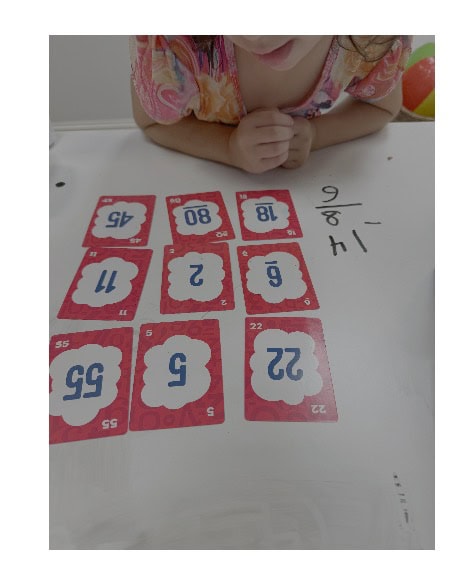
I’m also a big fan of incorporating movement into math, especially using giant number lines or place value charts for jumping games. These types of activities help reinforce number relationships, rounding, and even basic operations in an interactive way.
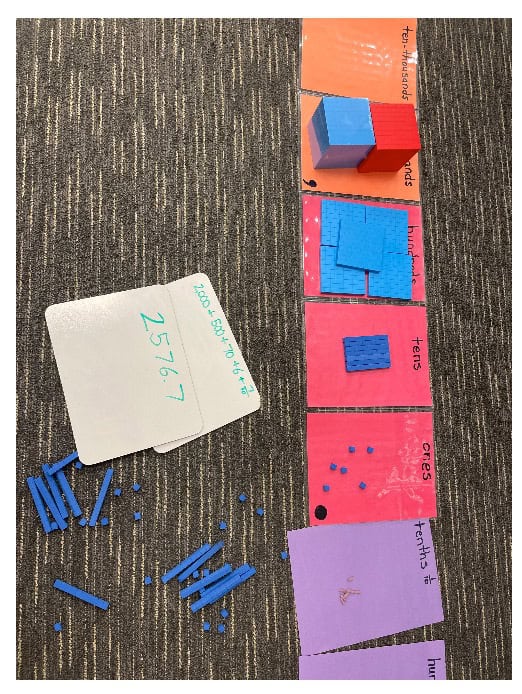
Final thoughts
Learning the basic math facts for all four operations is challenging but necessary for success in higher level math classes. Developing a plan, which is intentional and consistent, is the “secret” to success for your child to master the facts. There are an almost unlimited number of ways to practice the facts, but sticking to a schedule, adding in movement when appropriate, incorporating games and technology and progressing in a logical order ought to be part of the plan. And do not forget to reward progress!
If your child child has struggled to learn the basic facts and or has other challenges in math, please contact Jennifer Disch at Engage the Brain to discover how a math learning specialist may be able to guide your child to become a more confident and successful math student.

Social media sites have changed the rules for minors. What does the law say? And what are the benefits and dangers of social media to kids?
The words social media conjure up a variety of thoughts and feelings depending on who is asked. On the positive end, some may say social media allows them to stay connected with family and friends who live far away and participate in online communities not available near by. On the negative end, others may share tales of critical and hurtful comments or encountering objectionable content. Wherever you stand on social media and its place in society, children live a different existence online, and some legal changes that went into effect recently may alter young people’s access to and use of social media sites.
First, let’s agree on what social media is.
According to Investopedia, social media refers to a variety of technologies that facilitate the sharing of ideas and information among their users. The sites typically feature user-generated content that lends itself to engagement via likes, shares, comments, and discussion. Some popular social media sites include Facebook, X (formerly Twitter), Instagram, TikTok and Youtube. (More on those later.)
In the state of Florida, as of January 1st, 2025, CBS News reports the minimum age to create an account is now 16. However, 15 year olds may either keep or start one with parental or guardian permission. Additionally, the law requires the sites to essentially terminate the accounts of existing minors. There are lawsuits currently filed that are challenging the law’s constitutionality.
Of course kids can lie and set their birthdate on the log-in site as “16,” but then when their reported birthday turns 18 the companies are free to sell their data. As someone said, data mining is the new oil.
What follows is an exploration of social media habits of kids, some of the potential dangers and benefits kids face while on the sites, and finally, some popular sites many children spend time on.
Amount of time kids spend on social media
The numbers, frankly, are frightening! According to a Gallup survey, time spent on social media sites breaks down like this:
4.1 hours per day for 13-year-olds and 5.8 hours per day for 17-year-olds. Girls tend to spend an hour more per day than boys on social media. Youtube and TikTok are the most popular sites along with Instagram.
These are averages, meaning some kids are spending much higher amounts of time on these sites than these numbers!
Do the math for a high school student: 7 hours in school + 8 hours (allegedly) sleeping + 6 hours on social media = 21 hours. That leaves 3 hours for homework, chores, part-time job, sports or other extracurricular activities. A huge complication is 31% of time spent on social media stems from what the researchers describe as “self-control problems.” Think of the Executive Function skill of emotion regulation! Many kids simply are failing at controlling their time on these sites.
Kids need guidance and coaching using the Internet and learning how to be good digital citizens. Common Sense Media reports: “If a caregiver is involved in a teen’s digital life, preps them for how to handle negative online situations, talks about protecting privacy and being kind, it can go a long way toward a more positive social media experience.”
Dangers of social media for kids
One cannot overstate the potential danger that exists in the online world. Seemingly all of the world’s children have retreated in to this realm, yet there is barely any oversight or protections built in. The social media media and tech companies are attempting to keep people online as long as possible through intricate algorithms.
For children in particular, some dangers include:
Inappropriate content such as nudity, self-harm, and violence.
Cyberbullying, whichcan run rampant with no real enforcement or punishment. People are emboldened to write aggressive and hurtful things they may never utter in face-to-face situations.
Poor mental health such as depression and anxiety have been linked to excessive – more than 3 hours per day – social media use in teens. Paradoxically, the sites purport to connect and create community, but teens report loneliness as another negative side effect.
Risky behavior where kids may be tempted to send explicit texts, photos or videos thinking they are private.
Exposing their location if privacy settings are not correctly set, a child’s physical location can be found by individuals with bad intentions.
Positives of social media participation
Of course like most cases, there are two sides to each story. When used properly social media certainly can offer some benefits to children. The National Institutes for Health (NIH) states the positives can include:
Community Sites can provide positive community and connection with others who share identities, abilities, and interests, especially those traditionally marginalized groups.
Access to information Provides an entry to learning about topics of interest and a vast amount of information about those issues.
Self-expression Kids can post thoughts, art, videos to share with their community of friends.
Form and maintain social connections While it is not always possible for friends to spend time together, these sites provide the means to maintain friendships and updates.
Popular social media sites by age group
Some parents may be well-versed on social media. For those that are not, here is a thumbnail sketch of some of the popular sites by age group:
Elementary age students
Zigazoo bills itself as the largest social media site for kids. It features moderation by humans – as opposed to an algorithm, positive and empowering content and a mission to provide youth with a safe and positive community.
Kinzoo Messenger is an app designed “for connection, creativity, and curiosity.” They purport to design the platform for connection, not to hook or keep kids on the app for extended periods of time.
Playkids + is focused on holistic development of kids. The platform promotes three areas of learning: interpersonal, where kids focus on respect and interacting in an appropriate manner; intrapersonal, in which kids learn about themselves, their feelings and emotions; and cognitive, where children learn how the world works.
Middle school age students
Girl2Girl Wall is a starter social media app for tween and teen girls ages 8-16. Like some of the other recommended apps the user-generated content is moderated by a human being. Content and conversations tend to revolve around young girl interests such as boys, make up, and cliques.
Lego Life is designed for Lego lovers, where they can share their creations and discover others’ designs. Lego offers themed challenges and contests with prizes! And like the others on here it is moderated.
Tik Tok for Kids is from the same popular app but is designed for kids 13 and under. Among some of the safety features is TikTok allegedly limits the amount of information gathered from these users. Of course it features videos of everything under the sun!
High school age students
Instagram is one of the more popular social media sites for teens and adults. Users can share photos and videos with their network, which others can like and or comment on. Content creators have access to editing tools such as filters and stickers to add creativity to their posts.
X (formerly Twitter) is a wildly popular site for people to share bite-sized thoughts, known as tweets, pictures, and videos. Like these other sites users can follow other members, like and comment on the posts. While there is monitoring by X, this is an adult site with language and videos featuring mature subjects. There are no parental controls, but there are privacy and safety settings that can help manage younger users’ feeds.
Tik Tok features short videos that people can share, comment on, and like. The app’s algorithm analyzes the users engagement and develops a personalized feed. Humor, dancing, and even educational content is featured.
Youtube is wildly popular among all age groups, which features a wide range of content from instructional videos to musical performances to comedy skits to television shows that are user created.
Final thoughts
Social media is a relatively new construct that both kids and adults have taken to. At their best they offer connection, community, support, validation, and an outlet for expression. At their worst they hook people for hours, torpedo mental health, and allow some of the Internets nastiest residents to lurk. Governments have begun to address some concerns for children and these sites by limiting the age of access. Time will tell whether these age-based interventions will work.
The numbers don’t lie – kids are spending an enormous amount of time scrolling through the sites. Therefore, parents need a healthy understanding of how these site work, and it is critical parents and guardians guide children in best practices using social media sites. If your child struggles with self-control and spends hours on social media sites and or surfing the Internet, contact Jennifer Disch at Engage the Brain to learn how an Executive Functions coach could help guide your child to make better choices with time management and control their emotion regulation.